
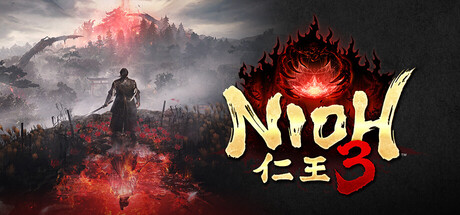


Team Ninja has done it again, and arguably, they have done it better than ever before. Nioh 3 has arrived, and if the numbers on Valve’s storefront are any indication, the appetite for masocore samurai action hasn't waned. According to recent metrics, the third entry in the saga has achieved a series-high concurrent player count on Steam, eclipsing the launch numbers of its predecessors. It is a massive win for Koei Tecmo, proving that the franchise has successfully stepped out of the "Souls-clone" shadow to establish its own dominant identity. However, this victory lap is currently being tripped up by a terrifying technical issue that is literally erasing player progress.
While the combat is earning praise, a critical bug is terrorizing the community. As reported by Rock Paper Shotgun, a rare but devastating glitch is corrupting save files when players interact with shrines. For the uninitiated, shrines are the Nioh equivalent of bonfires—the only place to level up, rest, and save your game.
The irony here is cruel. The shrine is designed to be a moment of relief in a game defined by tension. Instead, players are finding that the act of saving is currently the most dangerous part of the game. Team Ninja has acknowledged the issue and is scrambling to deploy a hotfix, but until that patch drops, every prayer is a gamble. For a game that demands dozens of hours of intricate build-crafting, a corrupted save isn't just a bug; it's a reason to uninstall.
Despite the technical anxiety, the reason players are hitting record numbers lies in the gameplay loop. GamingBolt’s recent deep dive highlights exactly why the combat is resonating so strongly: it’s about the layers. Team Ninja hasn’t simplified the formula; they’ve added a new dimension called "Spirit Veins."
According to early guides surfacing from VGC, Spirit Veins act as a sub-system to the traditional Guardian Spirits. In previous games, your Guardian Spirit was a singular "ultimate" button. Now, the Spirit Vein system allows players to channel that power into granular stat boosts and combo extenders without fully transforming. It bridges the gap between human combat and Yokai abilities, smoothing out the flow of battle. It’s a smart evolution that rewards aggression over turtling, pushing the "Ki Pulse" stamina management mechanic even further.
The surge in player interest also stems from the game's renewed focus on boss variety. The guides popping up across the web paint a picture of a game vacillating between historical duels and mythological horror. Polygon’s breakdown of the "Demon of Pride" fight showcases the latter—a massive, grotesque Yokai requiring specific elemental counters and spacing.
On the flip side, Kotaku’s coverage of the Yamagata Masakage boss fight points to the return of the grueling human duels that defined the first Nioh. Masakage, a historical retainer of the Takeda clan, offers a different challenge: a battle of parries, stamina management, and frame-perfect dodges. This duality—fighting a building-sized demon one moment and a master swordsman the next—is the franchise's heartbeat.
Nioh 3 is in a precarious but promising position. The gameplay systems are deeper than ever, the boss roster is punishingly diverse, and the player base is larger than it has ever been. But goodwill is a finite resource. Team Ninja has built a masterpiece of mechanics, but they need to fix the shrine corruption bug immediately. A game this difficult shouldn't have its hardest boss be the save system.




Comments
Fill out the form above to leave a comment