
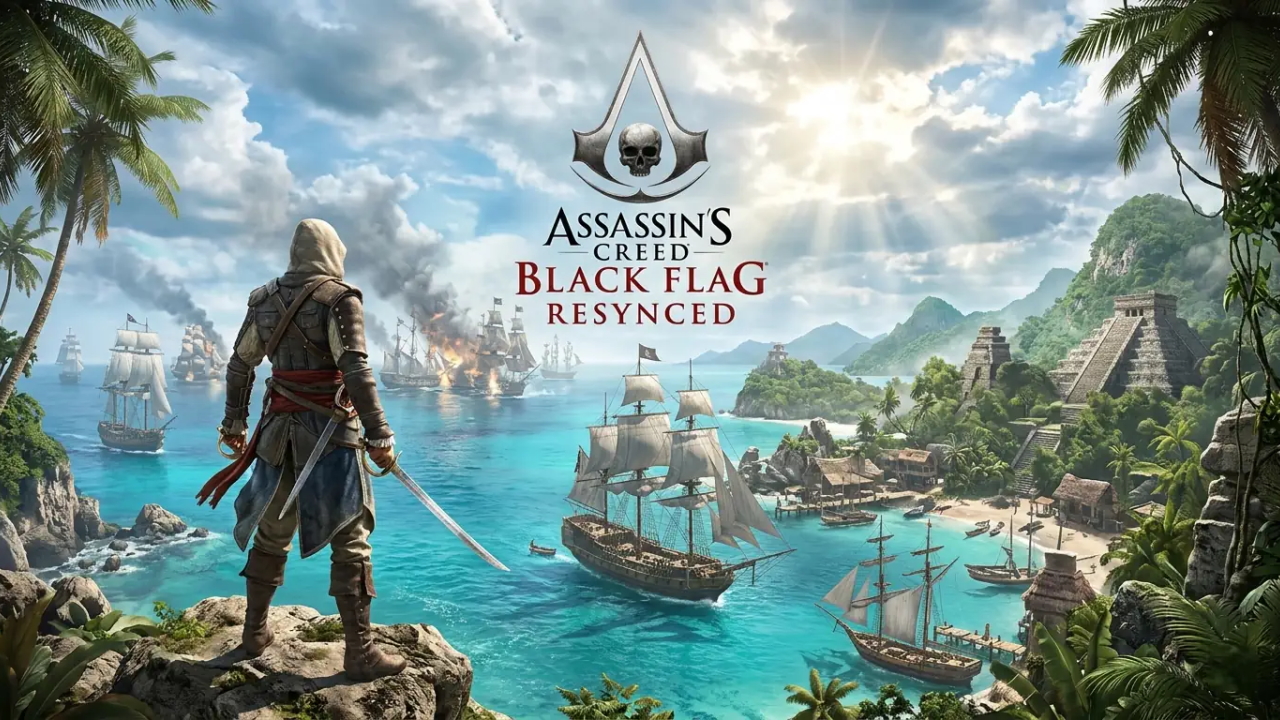


Ubisoft keeps insisting that Assassin’s Creed IV: Black Flag Resynced is a full remake, not a remaster. After the latest previews, that argument finally makes more sense. The project still follows the structure of the 2013 original almost scene for scene, but the deeper changes become obvious once the game starts moving instead of posing for comparison screenshots on social media.
One of the more interesting details from previews is how restrained the remake actually sounds. Black Flag Resynced adds around six hours of new content, including extra missions, expanded endgame chapters, and a new type of side activity involving burning treasure ships. But Ubisoft is clearly trying not to overload the experience with systems that would drag it closer to the RPG-heavy design of recent Assassin’s Creed games.
That restraint matters because Black Flag originally worked for a simple reason: freedom. Sailing between islands, hunting ships, and stumbling into chaos naturally created stories without the game constantly interrupting players every two minutes with another skill tree or crafting screen.
Ubisoft seems aware that this balance is fragile. Developers repeatedly describe Resynced as a “classic Assassin’s Creed experience,” which honestly sounds like the closest thing modern Ubisoft has to self-reflection.
Technically, the remake appears far more ambitious than many expected when leaks first surfaced. Combat has been rebuilt, traversal animations were expanded, and naval systems reportedly react more dynamically during storms and large-scale battles.
At the same time, Ubisoft intentionally keeps some older elements intact — including the famous “drunk loading screen,” which somehow survived long enough to become sacred gaming history. That decision says a lot about the remake’s approach overall. Resynced is trying to modernize Black Flag without sanding off the strange personality traits people still remember a decade later.
The visual upgrades also seem more meaningful than the usual texture refresh treatment. Cities feel denser, vegetation reacts more naturally during movement, and ocean simulation now plays a much larger role in atmosphere and navigation. Ubisoft clearly wants the Caribbean to feel less like a backdrop and more like an unpredictable space players move through carefully.
There is also a larger reason this remake matters. Black Flag arrived before Assassin’s Creed became associated with hundred-hour checklists and maps dense enough to resemble strategy game interfaces.
That older structure suddenly feels valuable again. Several previews mention how focused the pacing feels compared to modern entries, where entire regions often exist mainly to hold icons and crafting resources. Black Flag Resynced benefits from being built around momentum instead of scale.
Ironically, Ubisoft may have spent years chasing bigger open worlds only to rediscover that players mostly wanted strong movement, memorable cities, and pirate ship battles that occasionally turned into disasters because somebody underestimated a storm. And honestly, that sounds like a healthier direction for the series than another continent-sized map filled with color-coded loot.




Komentarze
Wypełnij powyższy formularz, aby zostawić komentarz