
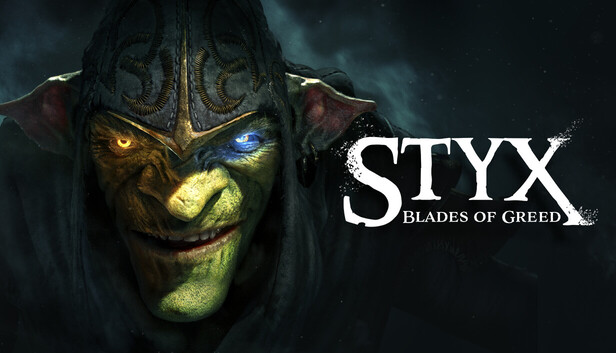


The drought of dedicated stealth games has finally broken, albeit with a familiar, snarky cackle. Styx: Blades of Greed launched this week, bringing the master of shadows back for another round of thievery and assassination. While the triple-A space has largely abandoned pure stealth in favor of action-RPGs with crouching mechanics, Cyanide Studio and Nacon are doubling down on the genre’s roots. Based on the launch week reception and critical analysis, Blades of Greed represents a significant structural shift for the series, aiming for a sandbox experience that critics are likening to a "Goblin Mode" Metal Gear Solid V, even if the execution doesn't quite hit the same polish.
The most striking takeaway from the initial wave of coverage is the game’s departure from linear corridors to wider, multi-approach sandboxes. As highlighted by GamesRadar, the shift in level design fundamentally changes the pacing. Where previous entries often felt like puzzle boxes with one or two solutions, Blades of Greed opens the floor. You aren't just hugging walls; you are interrogating the environment.
This sandbox approach allows for more systemic chaos. Players are reporting that the joy isn't just in remaining unseen, but in how the AI reacts to the tools at your disposal. The comparison to Metal Gear Solid V is lofty, but it tracks with the developer's intent: giving players a toolbox and a target, then stepping back. However, this ambition comes with a cost. Early reviews suggest that while the freedom is exhilarating, the larger scope sometimes dilutes the tension that tighter, handcrafted levels provided in Shards of Darkness.
The narrative and gameplay loop are heavily tied to the acquisition of Quartz, a resource that acts as both a plot device and a currency for upgrades. Walkthroughs surfacing for missions like "Quartz Compass Malfunction" and "Turquoise Dawn Whispers" reveal a game that demands exploration. These aren't simple fetch quests; they require navigating complex vertical geometry and solving environmental puzzles that feel distinct from the combat.
The reliance on Quartz shards for progression seems to be the friction point for many players. You aren't just XP farming; you are physically hunting for resources to keep your abilities viable. This adds a survivalist layer to the stealth. If you burn through your amber or resources too quickly in a botched encounter, the subsequent extraction becomes exponentially harder. It creates a high-stakes rhythm, forcing players to weigh the risk of a detour against the reward of a new skill unlock.
Nacon has been surprisingly candid about the tone of the game, emphasizing the "abrasive" nature of the protagonist. Styx has always been an acquired taste—a foul-mouthed, fourth-wall-breaking goblin who insults the player as often as he stabs guards. In Blades of Greed, the writers have leaned into this hard.
According to a deep dive from TechPowerUp, the character's bitterness is central to the narrative framing. He isn't a hero saving the world; he is a greedy creature trying to survive it. This distinguishes the game from its contemporaries. You aren't playing a stoic samurai or a high-tech spy; you are playing a pest. This affects how the world treats you—guards don't fear you until you strike; they look down on you. It is a clever ludonarrative trick that reinforces the underdog dynamic of the gameplay, even if the humor occasionally misses the mark for some critics.
The consensus emerging from outlets like CogConnected and press roundups is that Styx: Blades of Greed is a "good, not great" entry that nonetheless serves a starving audience. It occupies that comfortable "double-A" space: ambitious enough to be interesting, but rough enough to require some patience. The stealth mechanics are sharp, the verticality is impressive, and the move toward open-ended problem solving is a welcome evolution. For players tired of skill trees in shooters and craving the tension of a light gem turning red, Styx’s return is a successful heist.




Comments
Fill out the form above to leave a comment