
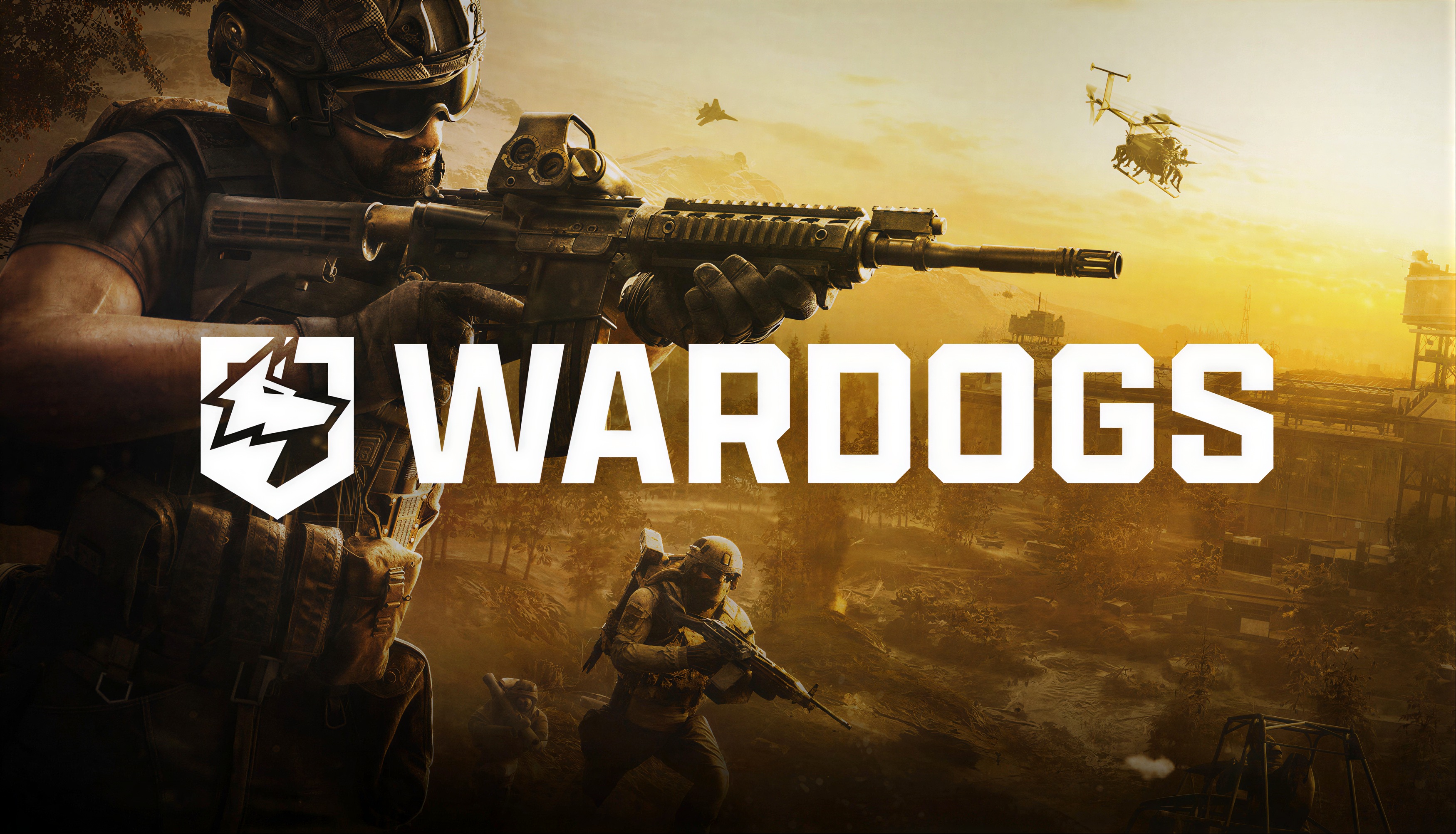


Every few years, a multiplayer shooter promises to recreate the feeling that made Battlefield special. Huge maps, dozens of players, tanks rolling through buildings and enough explosions to make individual gunfights feel like minor events in a much larger war.
WARDOGS certainly looks like another attempt. The 100-player FPS enters Early Access on September 10 after attracting enormous attention during its beta. But spend some time looking beyond the destruction and military hardware, and its most interesting ideas have surprisingly little to do with simply making Battlefield bigger. WARDOGS wants players to actually build the battle they're fighting.
Matches revolve around three teams fighting over a Control Zone, but the important part is what happens around that objective.
Players can construct fortifications and establish forward positions, turning useful pieces of terrain into defensive strongholds. A quiet route across the map can become important because somebody decided to reinforce it. A position that looked safe several minutes ago can suddenly become exposed when enemy vehicles begin tearing the surrounding structures apart. Destruction therefore works alongside construction instead of existing purely for spectacle.
That creates an interesting rhythm. You're not only learning where the useful positions are on a map. You're watching those positions change because of decisions made by both teams during the match.
WARDOGS also understands something large-scale shooters occasionally forget: when dozens of people are fighting together, not everyone should need to play like they're trying to top the scoreboard.
Useful actions earn money. Capturing objectives matters, but so does healing teammates, transporting soldiers and contributing to the wider battle. That money persists between matches and can then be spent on weapons, equipment and vehicles.
It gives support and logistical play a more tangible purpose. Driving several teammates into an important fight might be less glamorous than clearing a building yourself, but WARDOGS has systems designed to recognize that contribution. This matters in a 100-player game. The larger a battle becomes, the stranger it feels when success is still measured mostly by how many enemies one person can shoot.
The decision to divide those 100 players between three factions creates another important difference. Two-team shooters are relatively easy to read. Your side attacks, their side defends, and the frontline usually develops somewhere between the two. Add a third force and that certainty disappears.
An enemy concentrating on your position may suddenly have to respond to another faction. A strong defensive line can become vulnerable because the battle shifts somewhere unexpected. Temporary situations emerge where two teams pressure the same opponent without ever becoming actual allies. Combined with changing objectives, construction and destruction, this gives WARDOGS the potential to produce matches that don't follow exactly the same route every time.
None of this guarantees WARDOGS will become the next major multiplayer FPS. Early Access begins with expectations that became much larger after the beta exploded in popularity, and the game will need more maps, content, polish and long-term support to keep players interested.
But the excitement around WARDOGS makes more sense once you look past the obvious Battlefield comparisons. Bulkhead isn't merely putting 100 soldiers on a large map and hoping chaos will do the rest. Building, destruction, persistent money, vehicles, logistics and three competing teams all give players different ways to influence what happens.
The best large-scale shooters make you feel like one small part of an enormous battle without making that small part feel irrelevant. WARDOGS might have figured out that adding more players isn't the difficult part. Giving all of them something meaningful to do is.

Kommentarer
Fyll i formuläret ovan för att lämna en kommentar