
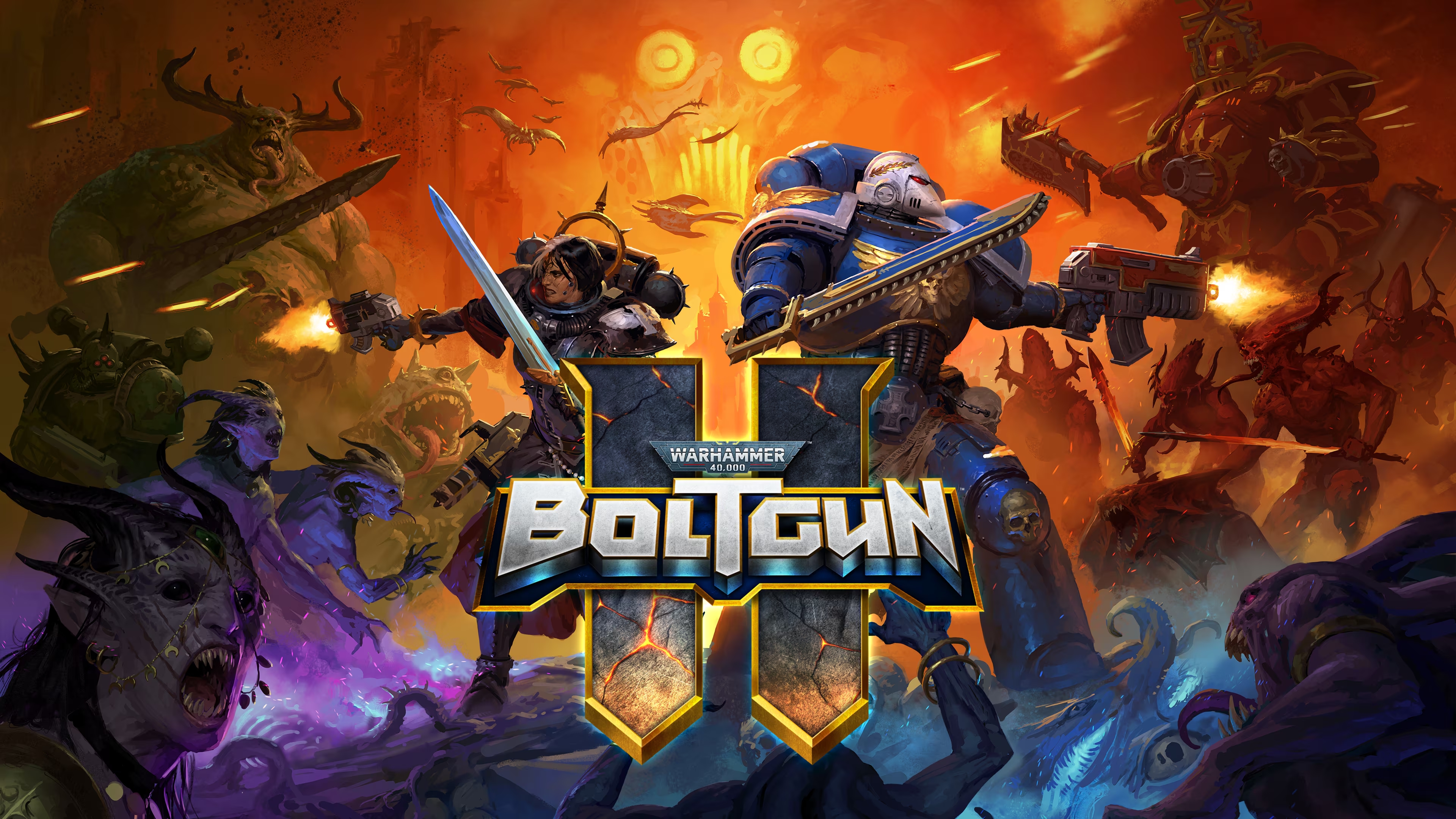


The Chaos Gods of Warhammer 40,000 rarely agree on anything. Khorne wants blood, Nurgle spreads disease, Tzeentch treats reality like an unfinished puzzle, and Slaanesh has a worrying definition of entertainment. Somehow, Boltgun 2 has convinced all four to contribute enemies to the same shooter. It's terrible news for the Imperium, but excellent news for anyone who thought the first game's battles could use a little more variety.
Arriving October 14, Warhammer 40,000: Boltgun 2 brings back the gloriously noisy retro FPS action of Auroch Digital's original. This time, however, the enemies are more than different shapes waiting to be shot. Each Chaos faction brings its own tricks, and players have two Imperial heroes to handle the mess. The galaxy's loudest conflict just got louder.
Khorne's followers are the easiest to understand: they want to get close and hit you very hard. Bloodcrushers are especially unpleasant, since knocking a rider off its mount doesn't necessarily end the threat. It can simply leave you dealing with two angry problems instead of one. That kind of enemy design forces players to think beyond pouring ammunition into the largest target on screen.
Nurgle takes a slower, nastier approach. His heavily armoured Blightlord Terminators can turn parts of an arena into dangerous territory, making it harder to stand your ground. Tzeentch's forces prefer projectile-heavy attacks that demand constant movement, while Slaanesh's Daemonettes use speed and unpredictable positioning to punish anyone who stops paying attention. Each faction demands a different response.
That variety matters because the first Boltgun sometimes ran out of surprises before it ran out of enemies. Its weapons were satisfying, but familiar encounters could become routine, especially when a level kept sending the same opponents down another gothic corridor. Boltgun 2 has a chance to make players change tactics throughout a fight instead of repeating the one strategy that worked ten minutes earlier.
Imagine trying to avoid a wall of incoming projectiles while a fast-moving Daemonette closes the distance and a heavily armoured monster blocks your escape. The immediate question isn't simply which gun does the most damage. It's which enemy needs to disappear first, where you can move safely and whether switching weapons now is worth the risk. That pressure makes an arena memorable.
Of course, there is a fine line between challenging and unreadable. When several factions attack at once, visual clarity becomes essential. A screen full of explosions is fun until you can no longer tell whether you're dodging a projectile, a daemon or a particularly aggressive piece of scenery.
Fortunately, the Imperium has sent more than one person to clean up this disaster. Returning Ultramarine Malum Caedo remains the walking fortress fans remember, while newcomer Nyra Veyrath, a Sister of Battle, brings different weapons and abilities. Their contrasting combat styles should make the expanded enemy roster more interesting, since the best response to a threat may depend on who's holding the gun.
Caedo's appeal is obvious: heavy armour, brutal weapons and the confidence of someone who has never considered retreat a sensible career move. Nyra offers another way to approach encounters, giving players a reason to experiment instead of treating the second character as a different outfit for the same soldier. A branching campaign adds replay potential, particularly if both heroes make familiar situations feel meaningfully different.
Enemy design can only carry a shooter so far. Boltgun 2 also needs arenas that let its monsters behave differently, with enough space for fast enemies to flank, cover to break up projectile attacks and routes that reward smart movement. Four factions in one hallway don't automatically make a better fight.
The original game's navigation could also become a battle of its own, with similar-looking corridors making the next objective surprisingly difficult to locate. The sequel's new environments and branching paths sound promising, but they need clear landmarks and sensible pacing. Players should be hunting heretics, not spending twenty minutes hunting an exit sign.
Boltgun 2's most promising improvement isn't simply that it contains more enemies. It's that those enemies might make the player work harder in interesting ways. Khorne pressures you up close, Nurgle restricts your options, Tzeentch attacks from range, and Slaanesh refuses to stay where you last saw her followers. Together, they could turn familiar retro FPS firefights into genuinely varied challenges.
There's still a risk that too many attacks and effects will make some battles messy, and two protagonists won't matter much if their arsenals don't feel distinct. But the ingredients are there for a sequel that improves on the original without abandoning its best qualities: fast movement, oversized guns and spectacularly excessive violence.
The four Chaos Gods may disagree about the ideal way to destroy humanity. Fortunately, Boltgun 2 lets players respond to every proposal with the same simple argument: sustained bolter fire.
Kommentarer
Fyll i formuläret ovan för att lämna en kommentar