
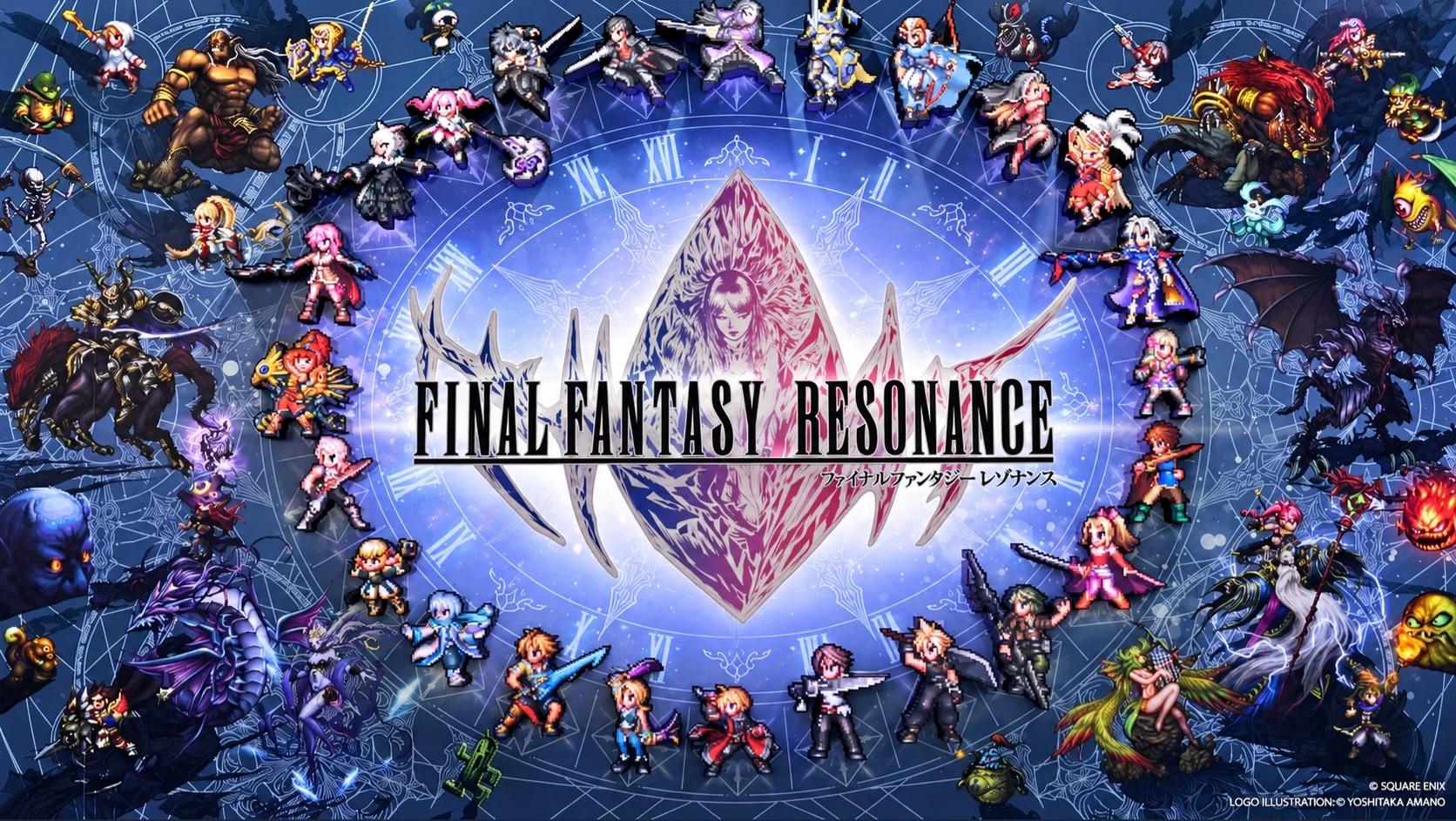


Final Fantasy has spent years moving away from turn-based battles, with recent games focusing on action and fast combat. But Final Fantasy Resonance takes a different approach, and critics seem happy with the result. The new RPG has received some of the strongest reviews of 2026, showing that Square Enix doesn't need to change everything about the series to keep players interested.
Launching on October 22, Resonance brings back traditional battles, party customization and a world filled with towns, dungeons and secrets. It also has an unusual history. The game is based on Final Fantasy Brave Exvius, a mobile RPG that shut down in 2025. Instead of letting its story disappear with the servers, Square Enix has turned it into a full single-player adventure.
The story follows Rain and Lasswell, two knights from the Kingdom of Grandshelt. Their adventure begins when a mysterious group starts destroying magical crystals, threatening the entire world. Naturally, saving the day involves visiting dangerous places, meeting new allies and fighting monsters that rarely know when to quit. It's a familiar setup for Final Fantasy fans, but that's part of the appeal.
Players can explore towns, search for hidden treasures and travel across a large world. There's even an airship, because walking everywhere eventually gets old. The biggest difference from recent Final Fantasy games, however, is the combat. Instead of relying on quick reactions, Resonance asks players to think about their next move, exploit enemy weaknesses and break their defenses.
This gives fights more variety than simply choosing the strongest attack every turn. Sometimes it's better to strike immediately, while other situations reward saving powerful abilities for the right moment. Players who enjoy experimenting with different strategies should find plenty to keep them busy, especially when tougher enemies start demanding more careful planning.
One of Resonance's main features is the Visions system. It lets players equip characters from other Final Fantasy games, including Cloud, Terra, Lightning and Noctis. There are 26 Visions to discover, and each offers useful abilities and bonuses. These characters aren't included just to remind players of older games, either, as their skills can change how the party fights.
For example, a character who normally focuses on dealing damage can learn support abilities, while someone built for defense can become more aggressive. Finding the right combination becomes an important part of preparing for tougher enemies. It's a clever way to celebrate Final Fantasy's history without turning the game into a collection of cameos. After all, Cloud has appeared in enough crossovers. It's nice when he brings something useful to the party.
While reviewers generally agree that the combat works well, the story has received a more mixed response. RPG Site praised the characters and battle system but criticized the main plot, particularly its final chapters. Some dungeons reportedly last longer than they should, while repeated boss encounters can slow things down. The familiar story about crystals and mysterious villains also doesn't always deliver the surprises players might expect.
Still, the characters help make the journey enjoyable. Their conversations and relationships give the adventure personality, even when the main plot follows a predictable direction. This seems to be Resonance's biggest weakness: Square Enix has done a good job bringing back classic RPG gameplay, but the story doesn't always reach the same level. For a series famous for memorable characters and emotional moments, that's a problem worth mentioning.
Resonance uses HD-2D graphics, combining pixel characters with modern lighting, detailed backgrounds and camera effects. It's a style Square Enix has already used in games like Octopath Traveler, and it fits Final Fantasy particularly well. The environments have more detail than older pixel-based RPGs, while the characters keep their classic appearance. Important story moments also use more active camera angles, helping the game feel modern without losing its old-school look.
Performance appears promising, too. Nintendo Life reports that the Switch 2 version runs at a smooth 60 frames per second, making it a good option for players who prefer portable gaming. The art style also means the game doesn't need realistic character models or enormous environments to make a strong impression. Sometimes a well-designed pixel character can communicate more personality than another highly detailed face.
The strong reviews suggest that Square Enix still has plenty of room for traditional Final Fantasy games. Not every new entry needs real-time combat, huge action sequences or a completely different battle system. Resonance shows that familiar mechanics can still work when developers give players enough freedom to experiment. Its turn-based battles, character builds and exploration offer a different experience from recent mainline releases.
That doesn't mean the next numbered Final Fantasy will return to its roots. Square Enix will probably continue trying different ideas, and there's nothing wrong with that. But Resonance proves there's still an audience for the style that made the series famous. The story may have its problems, but the gameplay gives fans a good reason to return to turn-based battles. Sometimes taking turns is more fun than constantly mashing the attack button.


Comentários
Preencha o formulário acima para deixar um comentário