
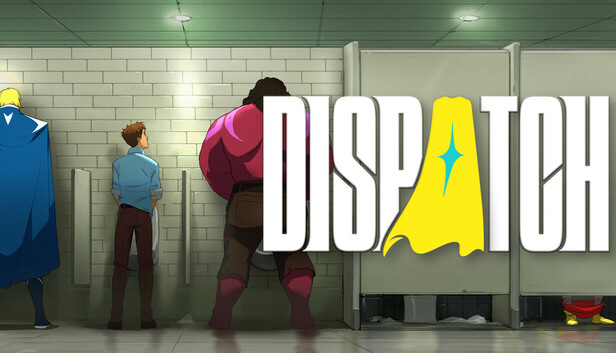


It’s official: Dispatch is a certified hit. In a landscape often dominated by live-service shooters and sprawling open-world RPGs, this narrative-driven adventure has carved out a massive audience, surpassing 3 million players shortly after its launch. But beyond the raw sales figures, the developers have released a fascinating slice of player data that tells a deeper story about what exactly is driving this success: an overwhelming desire for in-game romance.
According to new statistics released by the development team, only around five percent of players completed the game without romancing a single character. That means 95% of the 3 million people wandering the world of Dispatch found a virtual partner to latch onto. This isn't just a fun piece of trivia; it’s a clear indicator of how character-focused design is resonating with modern audiences.
Breaking the 3 million player mark so quickly is no small feat for a new IP. As confirmed by recent studio reports, the game maintained strong momentum throughout late 2025, culminating in this impressive milestone just as we ring in 2026. For context, many narrative adventure titles struggle to break the one-million mark in their first year. Dispatch has tripled that expectation.
This commercial performance validates the studio's risky production values. High-fidelity motion capture and branching dialogue systems are expensive, but the market has responded. The game’s availability across major platforms has certainly helped, but word-of-mouth regarding the game's emotional depth appears to be the primary driver. It’s a signal to publishers that single-player, story-rich experiences aren't just viable—they are thriving.
The standout statistic—that 95% of players engaged in a romance subplot—is the real headline here. It fundamentally shifts how we should analyze the game’s loop. While the core gameplay of Dispatch involves mystery solving and high-stakes decision-making, the data suggests that for the vast majority of the user base, the "social sim" elements are the main attraction.
When a developer reveals that fewer than one in twenty players opted to stay single, it implies that the supporting cast is exceptionally well-written. Players aren't just tolerating the NPCs to get to the next mission; they are actively investing time and resources to build relationships with them. This aligns with a growing trend we’ve seen in titles like Baldur’s Gate 3 and Cyberpunk 2077, where "shipping" culture and character dynamics drive longevity and community engagement long after the credits roll.
The success of Dispatch paints a clear picture for the future of adventure games. Players are signaling that they want agency not just in how they fight or explore, but in who they love. The "lonewolf" playthrough is mathematically irrelevant to the average consumer of this genre.
Moving forward, we can expect the developers to lean heavily into this. If DLC is on the horizon, it’s a safe bet that it will focus on deepening these relationships or introducing new ones, rather than purely mechanical expansions. Dispatch has proven that in 2026, the heart is just as important as the hitbox.
Comentários
Preencha o formulário acima para deixar um comentário