
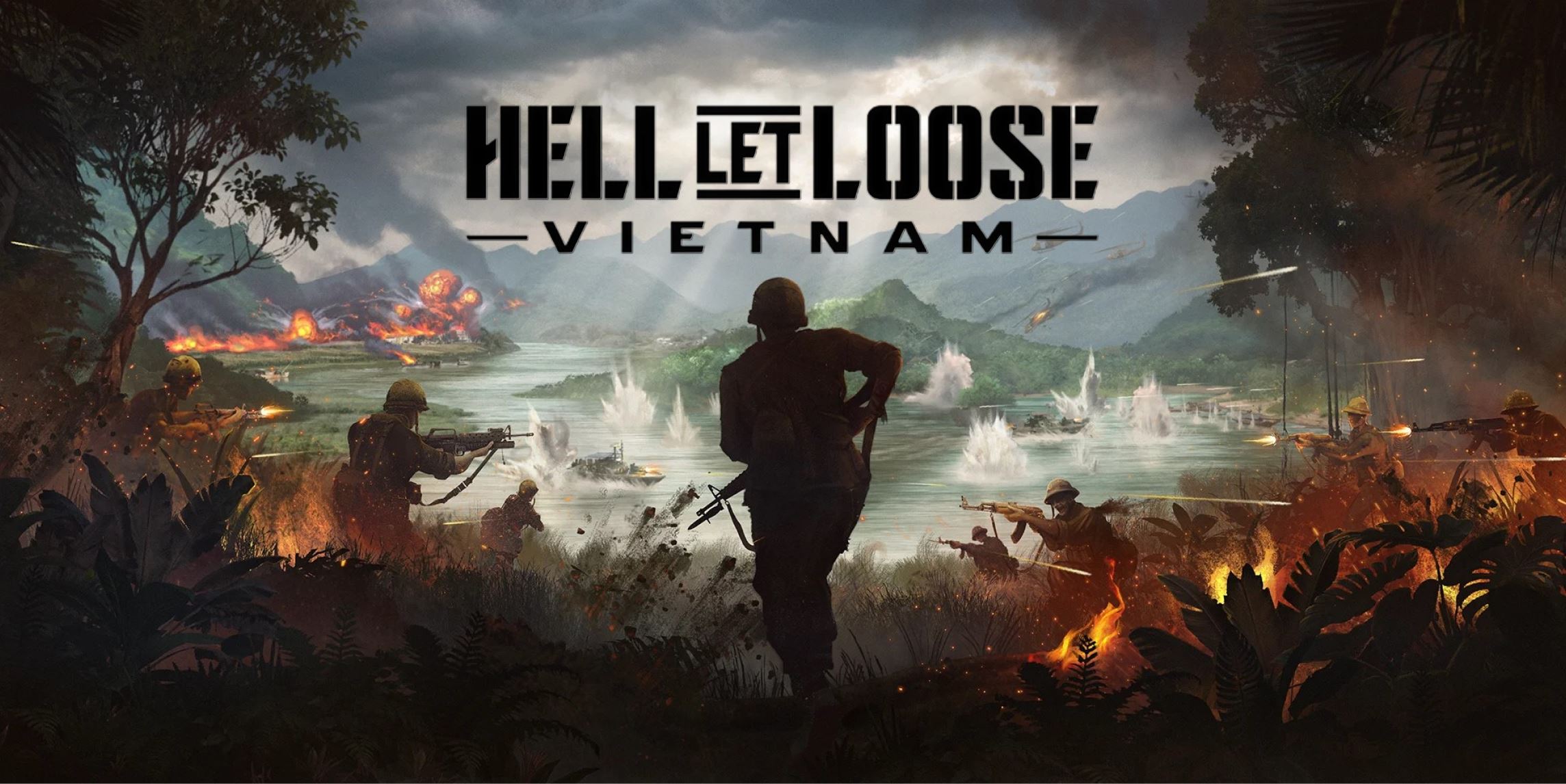


Hell Let Loose has never been particularly interested in making players feel like action heroes. You can spend ten minutes carefully moving toward an objective, checking every tree line and listening to your squad leader, only to discover that someone 200 meters away had a slightly better view of your helmet. Hell Let Loose: Vietnam keeps that unforgiving philosophy, but changes where the danger can come from.
With helicopters in the sky, tunnels beneath the ground and dense jungle limiting visibility, the battlefield is no longer neatly divided into two sides. Vietnam makes the series more unpredictable without sacrificing the teamwork that made the original stand out.
The move to Vietnam changes more than the scenery. American forces rely heavily on helicopters for transportation, supplies and fire support. A squad can quickly appear somewhere that previously seemed safely behind the fighting, which makes controlling territory considerably more complicated.
North Vietnamese forces answer with a very different tool. Their tunnel networks allow soldiers to move around the battlefield and establish pressure without following the obvious routes toward an objective.
That asymmetry gives both armies distinct ways to manipulate the battle. You aren't simply fighting another team with different uniforms and slightly different rifles. Understanding how the enemy moves becomes part of understanding where the enemy might appear next.
The maps make that uncertainty even worse. Dense vegetation limits visibility, rivers create natural routes through the battlefield and uneven terrain constantly breaks sightlines. Spotting an enemy before they spot you becomes as important as having better aim.
In other words, seeing the person shooting at you remains optional. Vietnam also expands movement and transportation. Players can swim, use patrol boats, move through the battlefield with helicopters and drag wounded teammates away from danger. Faster prone movement gives infantry another option when bullets start cutting through the vegetation.
None of these mechanics individually transform Hell Let Loose. Together, however, they make navigating the battlefield much less predictable.
For all the new machinery, the fundamental rule hasn't changed. Hell Let Loose: Vietnam is still built around 50v50 warfare where communication matters more than one player's kill count. Officers need to coordinate squads, supplies have to reach useful positions and someone eventually has to do the boring job that keeps everyone else fighting.
Early reviews repeatedly highlight how much the experience depends on that cooperation. A coordinated squad can turn a confusing jungle firefight into a carefully organized attack. A silent squad can turn the same match into a hiking simulator where the final attraction is getting shot by someone you never saw. That's always been part of Hell Let Loose's appeal and frustration.
Hell Let Loose: Vietnam doesn't try to make the series faster or easier. Instead, it takes the uncertainty already present in the original and gives it new tools. Helicopters allow attacks to arrive from above. Tunnels create threats behind established positions. Rivers open additional routes, while the jungle makes figuring out where everyone is considerably harder.
The result is still recognizably Hell Let Loose. You still need patience, communication and a willingness to accept that sometimes your carefully planned assault will end approximately three seconds after leaving cover. Vietnam simply gives the battlefield more ways to ruin that plan.




Kommentarer
Fyll ut skjemaet ovenfor for å legge igjen en kommentar