
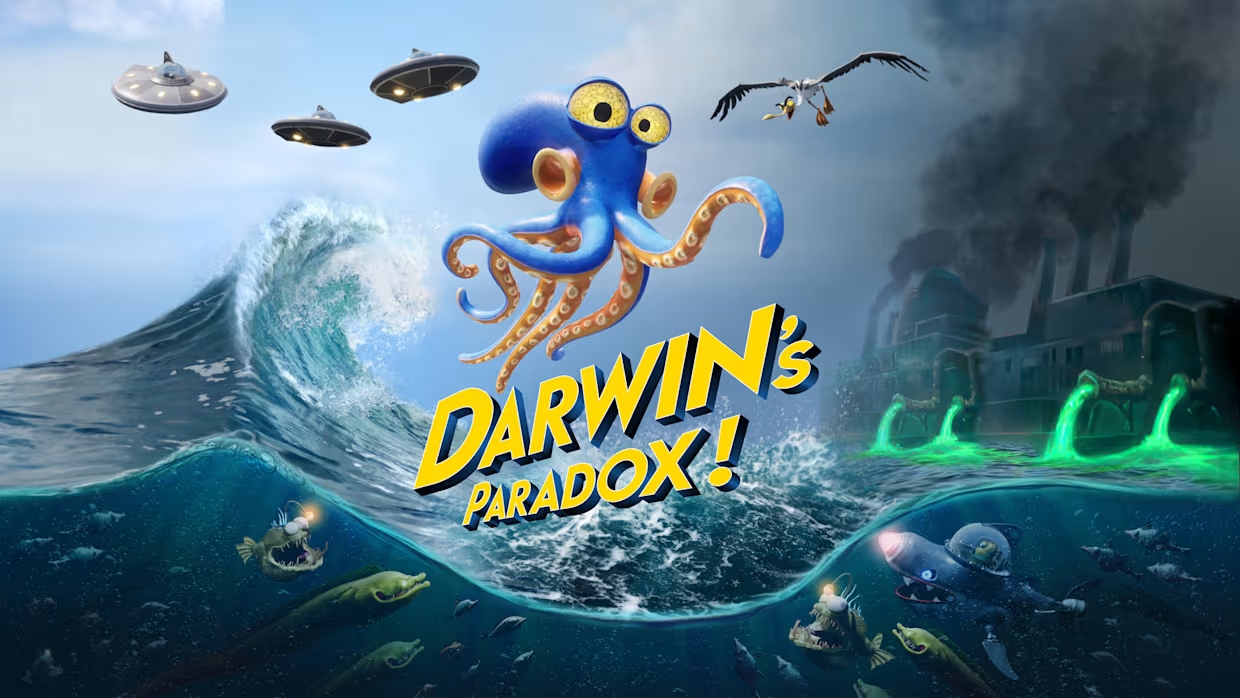


The puzzle-platformer genre has long been defined by its heavy hitters—the oppressive shadows of Limbo and the haunting, clinical tension of Inside. However, the arrival of Darwin’s Paradox marks a significant shift in how we approach the 2.5D cinematic adventure. Developed with a clear eye for high-fidelity spectacle, the game swaps out the traditional humanoid protagonist for a far more versatile lead: a small, bioluminescent octopus. While the initial reviews draw immediate parallels to Playdead’s masterpieces, the consensus from early deep dives suggests a game that trades psychological horror for high-concept sci-fi wonder. It is a technical showcase for Unreal Engine 5 that manages to feel intimate despite its grand, cinematic ambitions.
One of the most striking elements highlighted in recent analysis is the character design of the octopus lead. Creative Bloq notes that the developers have aimed for a "Pixar-style" hero, which creates a fascinating juxtaposition against the cold, mechanical environments. This isn't just an aesthetic choice; it fundamentally alters the gameplay loop. Unlike the limited mobility of the boys in Limbo or Inside, Darwin’s Paradox utilizes the octopus’s physiology to create a more vertical and tactile experience. Movement feels fluid and physics-driven, allowing for puzzles that involve sticking to surfaces and squeezing through tight apertures. This "passive prowling" mechanic, as described by critics, replaces traditional combat with a focus on environmental manipulation and stealth, making every encounter feel like a high-stakes game of hide-and-seek rather than a platforming challenge.
By leveraging Unreal Engine 5, Darwin’s Paradox pushes the visual boundaries of the platformer. The game’s world is dense with detail, utilizing advanced lighting and particle effects to sell its futuristic setting. According to technical reviews, the jump in fidelity isn't just window dressing—it’s central to the "discovery" system. Unlike many platformers that rely on explicit dialogue, Darwin’s Paradox leans heavily on visual cues hidden within the environment. Players are encouraged to hunt for specific discovery locations, which function as the primary method of world-building. These points of interest reward curious players with snippets of lore that explain how a sea creature ended up navigating a tech-heavy wasteland, turning the environment itself into the game’s primary narrator.
Perhaps the most important takeaway from the latest reviews is the game’s unique tone. GameSpot aptly describes it as "Limbo but not creepy," a distinction that matters for the broader platforming audience. While the game maintains a sense of vulnerability—you are, after all, a soft-bodied creature in a world of hard steel and lethal machinery—it replaces the jump scares and gore of its predecessors with a sense of awe and curiosity. The tension comes from the puzzles and the precision required to navigate the bio-mechanical hazards, rather than a sense of impending dread. This shift allows the game to focus on the "paradox" of its title: the struggle for an organic lifeform to survive and evolve within a synthetic, perhaps even alien, ecosystem.
Darwin’s Paradox represents a sophisticated evolution for cinematic platformers. By grounding its fantastical premise in the technical muscle of UE5 and the unique mechanical potential of an octopus protagonist, it carves out a niche that is distinct from the "dark and moody" trend of the last decade. For players, this means a gameplay experience that is as much about the joy of movement and discovery as it is about solving intricate logic gates. As we look toward the final release, the focus remains on how well the game can sustain its "passive prowling" momentum across its full runtime. If the environmental storytelling holds up, we may be looking at the new gold standard for the genre—one that proves beauty and brains are just as effective as shadows and scares.




Opmerkingen
Vul bovenstaand formulier in om een reactie achter te laten