
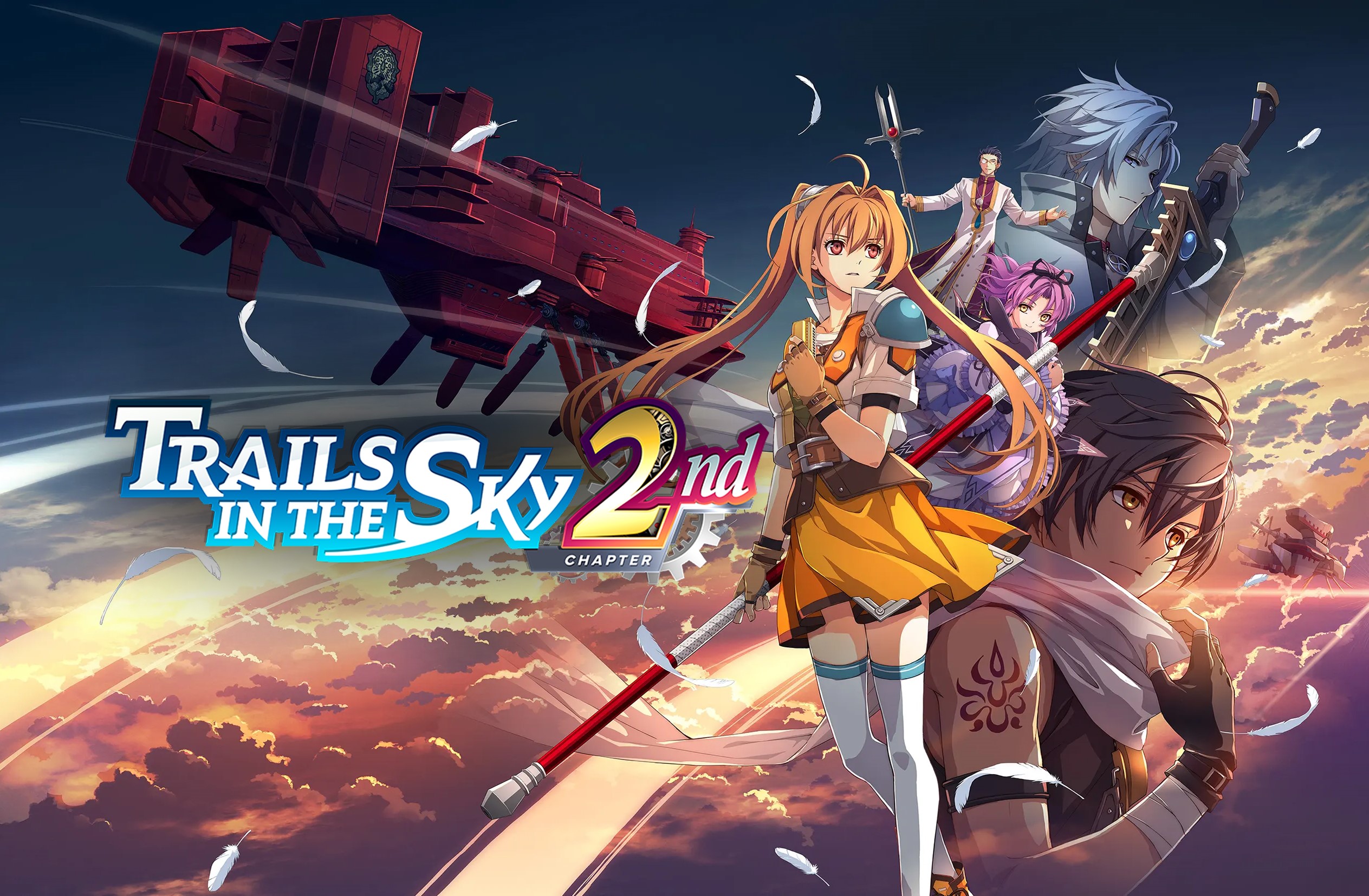


Remakes often seem determined to justify themselves by changing as much as possible. Combat gets replaced, stories are rewritten, familiar areas become dramatically larger, and eventually the new version starts feeling less like a restoration and more like an argument that the original needed fixing.
Trails in the Sky 2nd Chapter takes a more careful approach. Falcom has rebuilt a 2006 JRPG with modern 3D visuals, voice acting and a substantially different combat system, but the heart of the adventure remains remarkably familiar. Instead of reinventing a game people already loved, the remake concentrates on removing the barriers that might stop someone from loving it today.
2nd Chapter begins immediately after the first game's painful ending, with Joshua gone and Estelle forced to continue without him. What follows remains fundamentally the same story about Estelle's growth, her search for Joshua and the escalating threat of Ouroboros.
Falcom has made adjustments, but they're mostly designed to strengthen connections rather than rewrite history. New details acknowledge characters and ideas that became important across later Trails games, allowing a story originally written two decades ago to fit more naturally into a series that has grown enormously since then.
That's an important distinction. The remake benefits from knowing what Trails eventually became, but it doesn't use that knowledge to turn 2nd Chapter into a completely different story. It adds context where useful and leaves the central emotional arc alone.
The battle system gets much more freedom. Instead of simply reproducing the original combat with prettier animations, the remake continues the hybrid approach of the first Trails in the Sky remake, letting players move between real-time action and traditional command-based battles.
That makes ordinary encounters quicker without removing the tactical systems that become important when fights get difficult. Positioning, Arts, Crafts and party composition still matter, but players don't have to treat every minor enemy as a full turn-based event.
It's exactly the kind of modernization a remake can benefit from. The original system worked, but preserving every limitation wouldn't automatically make the new version more faithful. Falcom keeps the strategy while making the process of engaging with it smoother.
The visual transformation is just as significant. Locations that once relied on fixed perspectives and older character models now exist as fully realized 3D spaces, while expressive animations and extensive voice work give conversations a very different energy.
For a series famous for asking players to talk to seemingly everyone after every major story event, presentation matters more than it might in a shorter RPG. 2nd Chapter can take somewhere between 60 and 100 hours depending on how thoroughly you explore its world, so small improvements to movement, dialogue and combat accumulate across an enormous adventure.
The result feels modern without losing the deliberately patient pace that defines Trails. Falcom hasn't suddenly turned Liberl into an open world or removed the long conversations that make the series what it is.
Perhaps the best thing about Trails in the Sky 2nd Chapter is that it doesn't make the 2006 game irrelevant. The original still has its own visual identity, pacing and historical importance, and players who love it don't need a remake to prove that affection was justified.
The new version serves a different purpose. Trails has become a sprawling series with more than a dozen interconnected games, and asking newcomers to begin with RPGs designed for hardware from two decades ago has increasingly become a difficult proposition. These remakes give the beginning of that story a presentation that no longer feels separated from its modern sequels by generations of technology.
That's why 2nd Chapter's restraint matters as much as its improvements. Falcom changes the combat because combat can benefit from modernization, expands the presentation because the technology allows it, and adds connections because twenty years of later stories now exist. What it doesn't do is confuse modernization with replacement.
Trails in the Sky 2nd Chapter understands that a remake doesn't need to prove the original was outdated. It only needs to make an old adventure feel worth beginning again.
댓글들
댓글을 남기려면 위 양식을 작성하세요.