
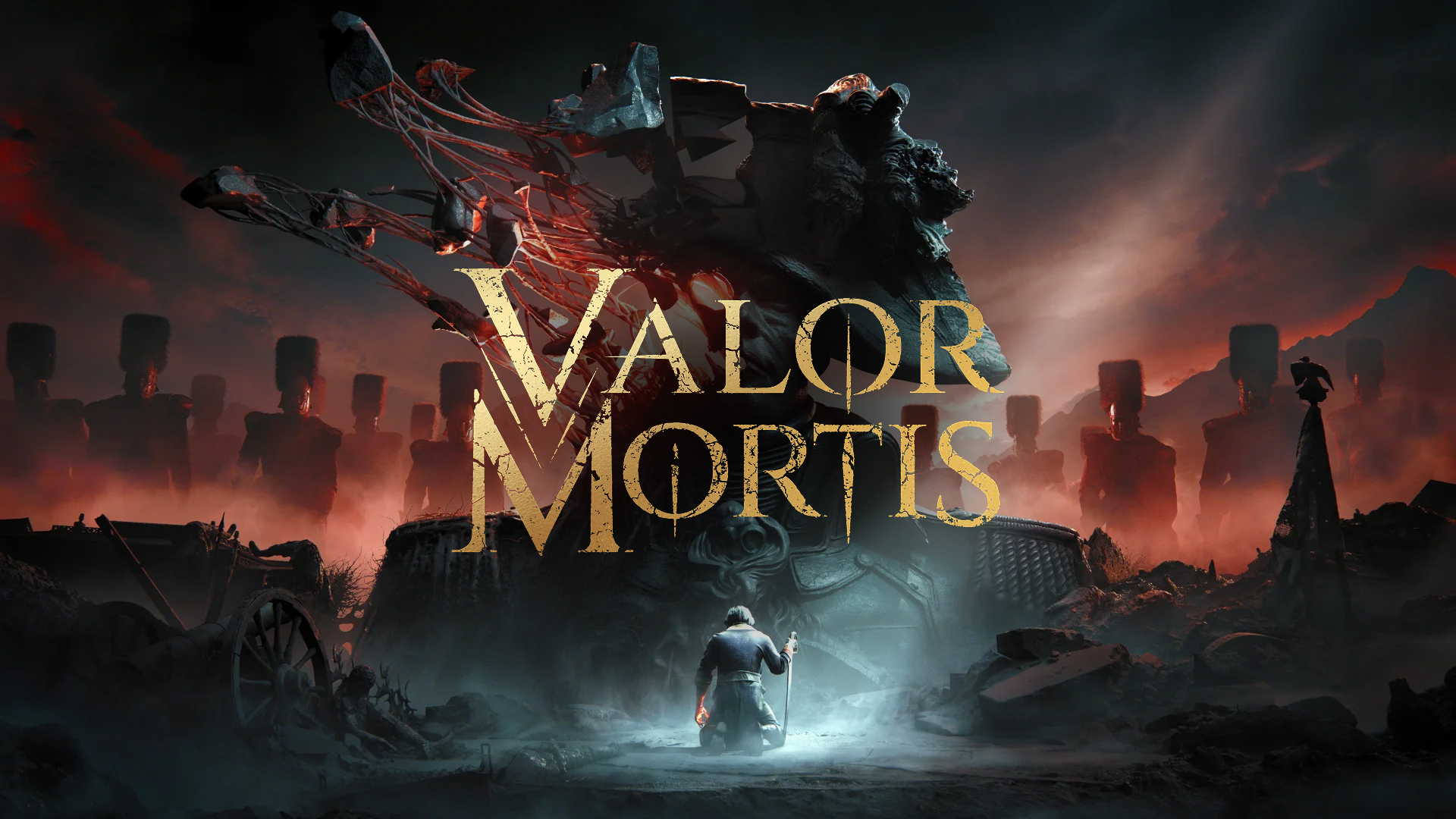


Soulslike games have spent years teaching players to watch enemy animations, time their dodges and accept that dying seventeen times to the same boss is apparently a perfectly reasonable way to spend an evening. Valor Mortis takes those familiar lessons and adds one rather inconvenient complication: you have to do everything in first person.
Developed by One More Level, the studio behind Ghostrunner, Valor Mortis launches today, October 13. It puts players in the boots of William, a soldier resurrected during the Napoleonic Wars, who discovers that his former comrades have become something considerably worse than ordinary battlefield enemies.
The historical horror setting is immediately appealing, but the real attraction is the combat. Valor Mortis attempts to translate the precision of a traditional soulslike into a perspective where even keeping track of your opponents can become a challenge.
In most soulslikes, a third-person camera gives players a useful view of the battlefield. You can see enemies approaching from different directions, judge distances and prepare for attacks before they reach you. Valor Mortis removes much of that awareness, putting you directly in front of opponents who seem extremely enthusiastic about stabbing you.
Combat revolves around carefully timed attacks, dodges and parries. Your sabre handles close encounters, while firearms and supernatural abilities provide additional options. Success depends on reading enemy movements rather than simply attacking until something falls over.
The first-person perspective makes successful parries especially satisfying. When an enemy swings a weapon directly toward your face, blocking it at the last moment feels much more immediate than watching the same action from several metres away. It also makes mistakes particularly unpleasant, because there's very little visual distance between you and whatever is trying to kill you.
Fortunately, One More Level understands responsive first-person action. The studio's Ghostrunner experience is noticeable in the movement and the way combat encourages quick reactions, even if Valor Mortis demands considerably more patience than slicing through enemies at full speed.
The perspective becomes more complicated when several opponents enter the fight. In a third-person soulslike, noticing an enemy approaching from the side is relatively straightforward. Here, keeping track of everything requires constant movement and careful positioning.
That creates some genuinely tense encounters. You can't simply rely on a wide camera angle to reveal incoming threats, so environmental awareness becomes essential. Narrow passages, corners and obstacles can help control groups of enemies, while careless positioning can leave you surrounded before you've realised what happened.
Unfortunately, the same design occasionally makes combat frustrating. An attack from outside your field of view can feel difficult to anticipate, particularly when the game expects precise timing. There's a fine line between punishing players for poor awareness and punishing them because the camera couldn't show them what was happening.
Valor Mortis doesn't always stay on the right side of that line. Some encounters become more irritating than challenging, especially when multiple enemies attack simultaneously. Getting defeated by a difficult boss is one thing; getting stabbed by a soldier you never saw approaching is a slightly less satisfying learning experience.
William isn't limited to traditional Napoleonic equipment. Alongside his sabre and firearms, he gains supernatural abilities that expand his combat options and help distinguish Valor Mortis from more conventional historical action games.
These powers are particularly useful when enemies become difficult to handle with ordinary weapons. Combining melee attacks, ranged options and supernatural abilities encourages experimentation, while resource management prevents players from relying on their strongest attacks indefinitely.
The result is a combat system with more variety than its basic sword-fighting mechanics initially suggest. Some encounters reward aggression, others require careful defensive play, and certain enemies become easier once you've worked out which tools are most effective against them.
However, the balance isn't always consistent. The opening hours can feel unusually demanding while players learn the timing and limitations of first-person combat. Later, additional abilities provide more flexibility, although some fights still rely heavily on repetition and memorising enemy behaviour. That isn't necessarily a problem for a soulslike, but it does mean players need patience before the full combat system starts to feel comfortable.
Boss encounters are where Valor Mortis makes its strongest impression. Facing a towering, grotesque enemy from a first-person perspective creates an intensity that traditional third-person combat doesn't always achieve. Every attack feels dangerously close, and learning when to dodge or parry becomes essential.
The best bosses reward observation and improvement. An attack that seemed impossible to avoid gradually becomes predictable, and surviving a difficult sequence feels genuinely satisfying. These moments demonstrate why the unusual camera perspective is worth exploring.
Other encounters expose its weaknesses. Large enemies can be difficult to track at close range, and certain attack patterns are harder to read when important movements happen outside the player's view. Combined with occasional difficulty spikes, that can turn a promising fight into an exercise in frustration.
Still, the strongest battles provide exactly what soulslike fans enjoy: a demanding opponent, a clear sense of improvement and the satisfaction of finally winning after several failed attempts. The difference is that in Valor Mortis, victory sometimes comes with the additional achievement of having kept the enemy on screen.
Valor Mortis doesn't completely reinvent the soulslike formula. Players still explore dangerous locations, learn enemy patterns, manage resources and repeatedly challenge opponents until their timing improves. Its biggest innovation is making those familiar mechanics work from a viewpoint the genre rarely uses.
That experiment produces some excellent moments. Sword fights feel intense, parries are rewarding, and the combination of firearms and supernatural abilities gives combat a distinct identity. The Napoleonic horror setting adds another layer of personality, particularly when former soldiers turn out to be much more dangerous after death.
The limitations are just as noticeable. Fighting groups can become awkward, certain attacks are difficult to read, and the difficulty doesn't always feel evenly balanced. Players who dislike learning encounters through repeated deaths probably won't discover a sudden appreciation for the process here.
But Valor Mortis deserves credit for taking a familiar genre somewhere different. One More Level has created a soulslike where awareness matters as much as reflexes, and where a successful fight can feel genuinely exhilarating. Just don't assume that because you can see the enemy in front of you, there isn't another one preparing to ruin your evening from behind.

Σχόλια
Συμπληρώστε την παραπάνω φόρμα για να αφήσετε ένα σχόλιο